A few years ago, impact investing felt unstoppable. Funds raised hundreds of millions for net zero, ESG, and systems change. Today, the landscape looks and sounds very different.
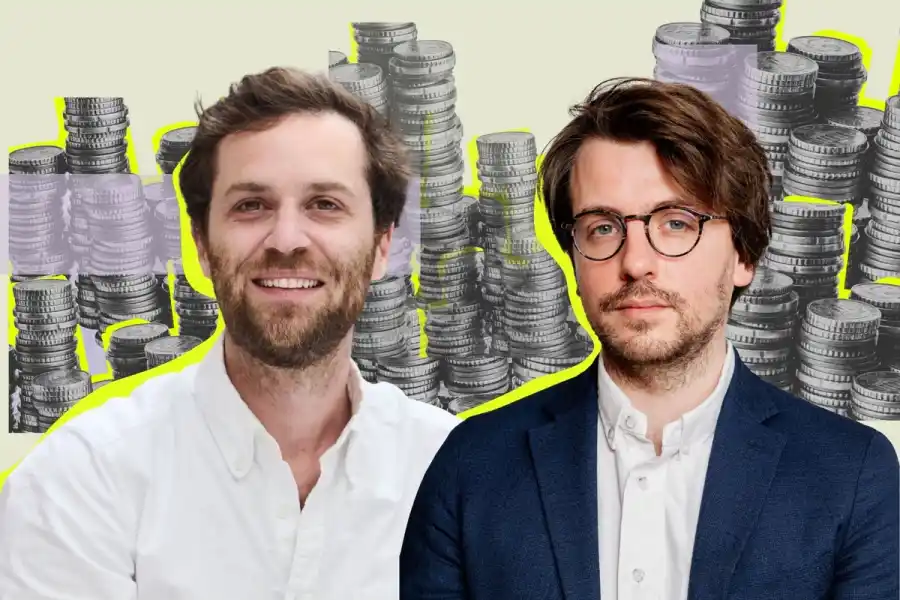
In this conversation, Louis Carle discusses the shift with Timothée Poulain, partner at impact VC Ternel, part of French private equity firm Capital Croissance.
Carle: A few years ago, impact investing was sold on purpose. Today it's about returns, sovereignty and liquidity. Has impact lost the narrative battle?
Poulain: I wouldn’t say impact investing has lost the narrative battle, but the conversation has definitely shifted in response to political and economic realities.
Today, boardroom discussions are far more pragmatic. The questions are straightforward: what's the return on investment? What KPIs are we tracking? What tangible value does this create?
The market is now rewarding value creation over impact narratives. The challenge for impact investors is therefore not to argue that impact matters, but to prove that impact creates value.
The discussion today is increasingly centred on energy, healthcare, and sovereignty. At the end of the day, customers aren't buying an ESG badge. They're buying a solution to a real-world problem.
But that’s exactly what we've seen across the impact businesses we've backed since 2017. Every environmental or social outcome has to translate into a business outcome: higher productivity, stronger margins, greater operational efficiency or a clear competitive advantage.
We remain cautious about business models that rely primarily on an ESG layer, a regulatory tailwind or a so-called green premium.
'We must prove that impact creates value'
What interests us are businesses where impact is embedded in the product itself and delivers an obvious commercial benefit to the customer. By contrast, when impact is largely a marketing message, represents only a marginal part of the business, or bears little relation to the realities of the value chain, it becomes difficult to build genuine investment conviction.
Ultimately, impact can no longer be an add-on. It has to sit at the very heart of the business model.
Carle: Where do you see genuine societal value from AI, beyond productivity gains? And is sovereign European AI a real competitive advantage?
Poulain: At the moment, AI is very much a productivity story.
We're actively looking for businesses that use AI to generate meaningful environmental or social impact.
On the environmental side, the picture remains complicated. There's a genuine tension here. When you compare certain AI applications with their energy and water consumption, the impact accounting is far from straightforward.
The societal case is easier to make. Healthcare is probably the most obvious example. AI can help reach populations that have historically been underserved, reduce the burden of administrative and repetitive tasks, and free up valuable time for healthcare professionals.
We're also seeing a growing number of use cases across industry. AI allows companies to iterate much faster when it comes to resource allocation, process optimisation and energy efficiency.
Another area that I believe will be hugely significant is research. Whether in pharmaceuticals, chemicals, food production or cosmetics, AI is dramatically accelerating the discovery of new molecules and formulations. It shortens the time needed to test hypotheses and bring new solutions to market.
As for sovereign European AI, I have more questions than answers.
Europe has been talking about digital sovereignty through cloud infrastructure for well over a decade, and the results have been mixed. I'm not convinced that sovereignty, in itself, constitutes a competitive advantage.
That said, if Europe continues to strengthen its regulatory framework, there will inevitably be demand for solutions that comply with those requirements. The real question is whether those solutions will be built by European champions or whether the hyperscalers will simply adapt their existing offerings to meet European standards.
I remain cautious on that front. Europe certainly needs its own champions. I'm just not convinced there is still much room left to capture in the general-purpose model space.
Carle: Private markets conversations are dominated by secondaries and liquidity rather than unicorns and hypergrowth. Is venture capital becoming financialised, or is this just what a maturing market looks like?
Poulain: I don't think it's a case of financialisation.
What we're experiencing above all is a liquidity crunch.
The underlying issue remains the lack of distributions back to investors. In Europe, the challenge is compounded by the absence of a truly deep public market for technology companies, the relatively small number of meaningful exits, and a broader macroeconomic environment that remains cautious.
The rise of secondaries and private credit reflects a market looking for solutions. But this isn't entirely new. Between 2021 and 2024, a significant share of transactions already involved secondary deals, whether LP-led or GP-led.
In a sense, the industry has been building its own liquidity mechanisms for some time.
What I see is a market growing up and working through some of the excesses of the last cycle. As is often the case in periods like this, the most disciplined players are likely to come out ahead.
For us, it reinforces the importance of our investment philosophy. Discipline on entry valuations, a credible route to exit and the ability to demonstrate genuine value creation become even more critical when liquidity is scarce.
Ultimately, investment theses matter more than ever. In that context, impact cannot be a nice-to-have. It has to create value, solve a genuine customer problem and be rooted in a robust business model.
I'd love to think we'll be there in five years' time, but honestly, I suspect we still have some way to go.
The day we stop talking about impact funds and simply talk about good investors, investors capable of aligning returns, value creation and broader systemic challenges, will be the day we know the market has truly matured.