This is a paid partnership with Kista Limitless. Want to get to know Kista as an innovation hub? Take a look at the new kista.io.
The classic S-mark appears on many electronic products. It began life at Semko, the Swedish Electrical Material Control Institute, a state inspection body, and today it is a well-established mark of quality around the world.
In 1994, Semko was acquired by what is now Intertek, a leading global provider of quality assurance, testing, inspection and certification within the so-called TIC industry. In practice, that means checking that products and systems meet legal requirements and safety standards before they can be sold. The group operates in more than 100 countries and employs around 45,000 people worldwide.
Kista remains home to the company’s Nordic hub. There, Intertek advises on global product rules and regulatory requirements, and tests new electronics across its extensive range of laboratories before they launch and reach consumers.
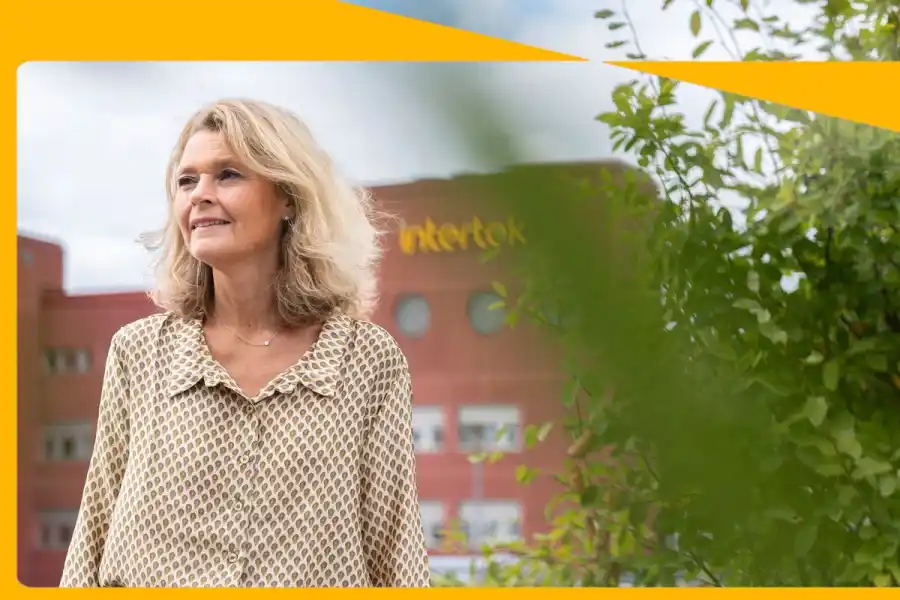
Maria Jonsson, CEO of Intertek Semko, describes the work as quality assuring customers’ products and helping them gain market access.
“We often help Swedish companies that want to establish themselves internationally and need to meet requirements on safety, electromagnetic compatibility or cybersecurity set by authorities in different countries,” she describes. “But it can just as easily involve international companies that want to reach the Swedish market.”
There is no shortage of companies that need to prove their products meet the rules.
“A washing machine today is a completely different thing from what it was 20 years ago. It can be connected and have far more advanced technology, with sensors and sophisticated components, which brings entirely different regulatory requirements than before,” says Jonsson.
As products grow more complex, it is now not unusual for customers to bring Intertek in during the design and development stage, long before a product reaches the market. At the same time, regulations are changing rapidly in many sectors, and companies also come to Intertek for help understanding the new demands placed on their products.
A lab with many roles
Around 300 people work at Intertek in Kista. The 5,000-square-metre premises house, among other things, laboratories where products are tested for electrical safety, electromagnetic radiation and environmental resilience. Here, damp, dust, sand and water put new electronics to the test under controlled conditions. Intertek also has laboratories beyond Kista. In Järfälla, a suburb of Stockholm, products are tested for resistance to heat, cold and vibration. In Västerås, a city in central Sweden, the company calibrates measuring instruments and tests equipment at high current levels.
“Being close to our customers matters a great deal, and many of them have their engineers on site with us during testing,” says Jonsson. “Kista suits us perfectly.”
Jonsson and her colleagues are in a unique position, gaining early insight into tomorrow’s technological shifts. Megatrends in sustainability, battery technology, preparedness and communications pass through the business constantly.
“Right now the defence technology market is growing rapidly, with radar, sensor and materiel-related solutions linked to rearmament,” she explains. “Medtech is also a strong area, as are cybersecurity and AI, particularly now that many different standards are being harmonised.”
Skills become a bigger business
Drawing on its deep expertise in Kista, Intertek also offers courses and training, an area that has grown into an increasingly important part of the business. The company provides, among other things, training and certification for AI-related products.
“We are building that expertise as locally as possible so we can guide our customers in the best way,” says Jonsson. “At the same time, we have very good access to specialist expertise at a global level, whatever is needed.”
The TIC market is currently being driven by a long list of new EU regulations covering areas such as AI, cybersecurity and batteries. Intertek often takes part in committees and working groups that develop the standards of the future.
Jonsson sees new regulatory requirements as a driver of both market development and innovation, while also placing greater demands on international players.
“Beyond the EU, there is a tendency to push national requirements, including in countries such as India,” she says. “That can create further market barriers through increased regulation. We see this happening more and more, which creates both local opportunities and international challenges for many companies.”
A growing cluster of deeptech companies
As more companies in defence technology, space technology and deeptech set up in the area, a new wave of opportunities is expected to take shape.
It is already visible in the neighbourhood. Proximion makes fibre sensors for steelworks and Formula 1 teams, Terasi builds connectivity for defence and space, and Exeger is scaling up solar cell production. All are companies whose products will ultimately need to be tested and approved before they can reach the wider world.
“Given our strong growth, this is an excellent time to hire more people and keep investing in Kista. We really like it here, and we see ourselves still being here in ten years’ time,” says Jonsson.
From Kista to the edge of reality
Kista is Stockholm’s buzzing deeptech district – a place where research labs, startups and global tech giants collide just fifteen minutes from the city centre. Want to know more about Kista? Read more here.