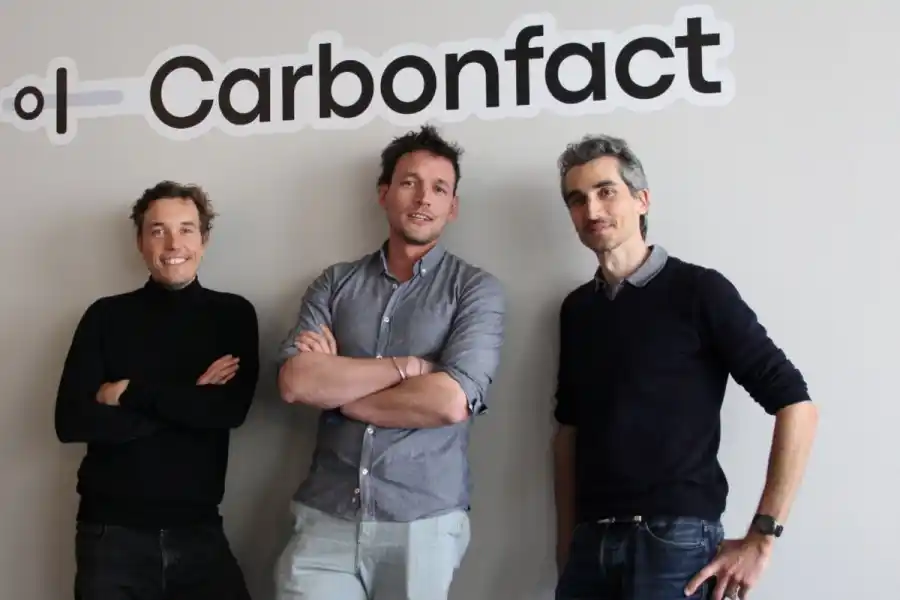
Paris-based Carbonfact has released more than 300 life cycle assessment datasets for textile and footwear production free of charge, in what the company calls the first fully disaggregated open database for the sector.
The datasets cover manufacturing processes including spinning, dyeing, weaving, and knitting, with emission factors across all 16 EU Product Environmental Footprint indicators. They are published under a Creative Commons licence, free to use and adapt provided derivatives credit Carbonfact and stay open.
The release targets a long-standing weakness in textile carbon data. Most emission factor databases bundle different technologies into a single average, according to Carbonfact, so a dyeing process gets one number whether it runs continuous or batch, and whichever fibre or chemicals it uses.
Brands relying on those averages cannot verify the figures or defend them in an audit, the company says. Across dyeing alone, Carbonfact claims its factors differ from the most widely used public dataset by between –52 and +86 per cent.
"Decarbonising fashion is not something one company does alone," said Dr Laurent Vandepaer, head of science at Carbonfact, in a press statement. "You can only reduce what you can measure, and better measurement requires data that is open, transparent, and improvable by the people closest to the supply chain."
The database was built by Carbonfact's in-house science team, drawing on peer-reviewed literature and primary factory data from its free supplier data exchange. It uses ecoinvent as its background database for upstream impacts such as energy and chemicals.
Ecoinvent, the industry's reference database, now plans to take Carbonfact on as a data supplier.
"We look forward to integrating their data into future releases of our database," said Emilia Moreno Ruiz, chief technical officer at ecoinvent, in a statement.
Pierre Matteoni, textile engineer at French environment agency ADEME, called the release a positive initiative for the industry, saying such a public dataset could eventually feed into mechanisms like France's environmental cost labelling scheme.
The move comes two months after Carbonfact acquired retail carbon tracking startup Vaayu, as Impact Loop previously reported.
Founded in Paris in 2021 and backed by investors Alven, Headline, and Y Combinator, the company says its platform is used by more than 300 brands including On, Ganni, and The North Face.
Subsequent releases will add datasets for viscose, non-woven fabrics, apparel assembly, bovine leather, and dyeing and printing chemicals.